
 +86 18928918121
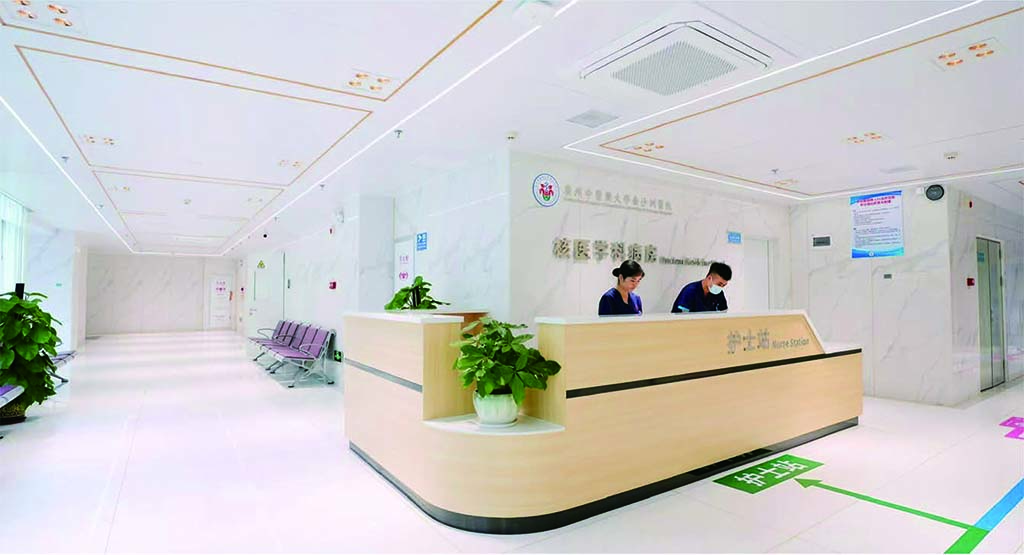
Department ot Nuclear Medicine
Since its establishment, the Department of Jinshazhou Hospital of Guangzhou University of Chinese Medicine, The department boasts a skiled and dedicated team of physicians, nurses, and technologists who are committed to clinical excellence, education, and research. lt provides comprehensive nuclear medicine imaging diagnostics and radionuclide therapy. Currently, the department has a total of 37 staff members.
Main features and clinical work
Radiopharmaceutical Therapy
lodine-131 Therapy for Differentiated Thyroid Cancer (DTC)
Recognized as one of the earliest examples of targeted therapy, molecular imaging, and theranostics, 1-131 therapy constitutes an essential element in the triple-therapy regimen for DTc (“surgery + 1-131 therapy + TSH suppression””). The clinical portfolio of our department encompasses the application of |-131 $PECT-CT image fusion for diagnosing metastases, as well as molecular targeted therapy for radioiodine-refractory DTC (RAIR-DTC).
lodine-131 Therapy for Hyperthyroidism
This method is characterized by its simplicity, well-established effcacy, low recurrence rate, minimal side effects, and high safety profle. t is particularly suitable for patients with signifcantly enlarged thyroids, as well as those for whom antithyroid drug (ATD) therapy has been ineffective, has resulted in relapse, or has caused adverse effects such as leukopenia liver impairment, or allergic reactions.
Phosphorus-32 (P-32) Patch Therapy
This method is primarily used for the treatment of keloids and infantile hemangiomas. The procedure is characterized by its simplicity,safety,and proven efhcacy.
Strontium-89 Therapy for Metastatic Bone Tumors
This treatment is primarily used to alleviate cancerous pain caused by bone metastases from malignant tumors (such as prostate cancer, breast cancer, lung cancer, etc.. its main advantage is the long duration of pain relief.
Yttrium-90 (Y-90) Resin Microsphere Selective Internal Radiation Therapy (SIRT)
This treatment is primarily indicated for unresectable maliqnant liver tumors, such as colorectal cancer liver metastases and primary hepatocellular carcinoma. The therapeutic process begins with a pre-treatment planning phase involving nuclear medicine SPECT-CT imaging (often referred to as Tc-99m MAA mapping) to assess the patient’s suitability for treatment and calculate the therapeutic dosage. Subseguently, the Y-90 resin microspheres are delivered directly to the target tumors via the hepatic artery during an interventional radiology procedure. The tumors are then destroyed by the beta radiation emitted by the Y-90.
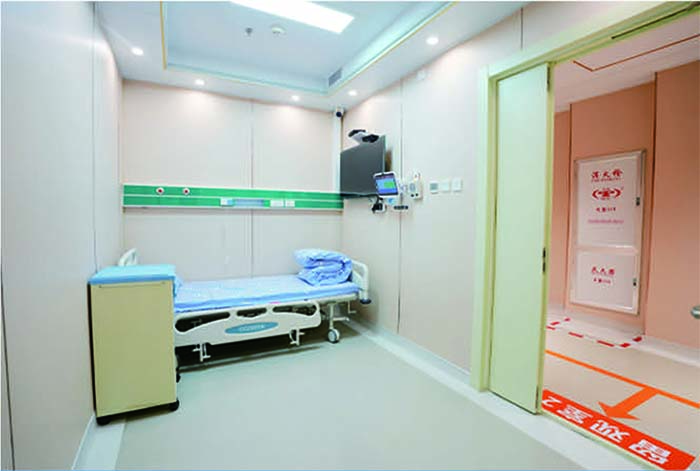
Yttrium-90 Observation Ward (4 rooms)
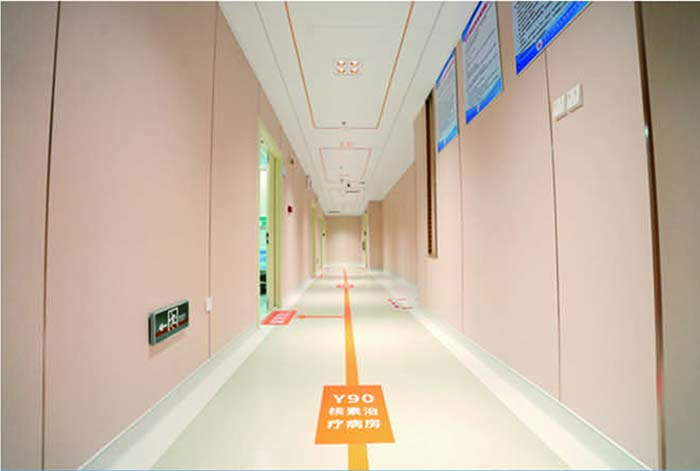
Ward Public Area