
 +86 18928918121
REGARDING US
The Deep Integration of Modern Western Medicine and Ancient Eastern Wisdom
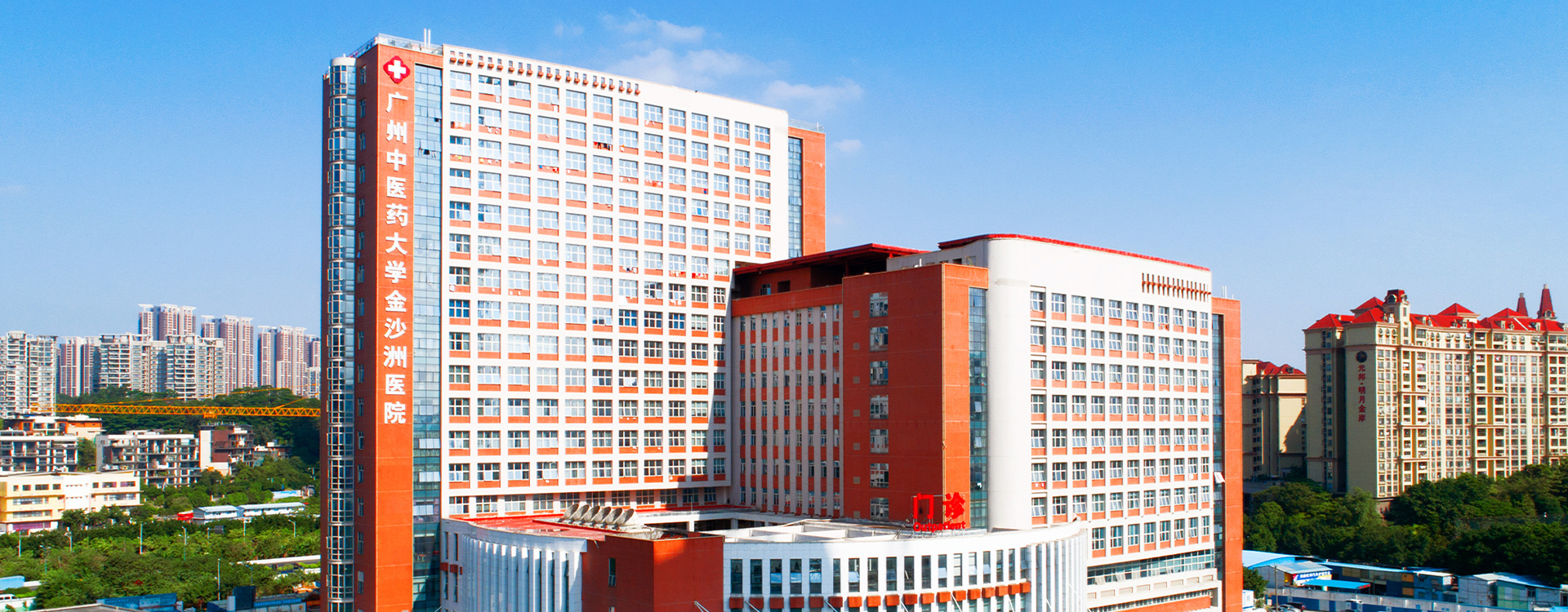
Jinshazhou Hospital of Guangzhou University of Chinese Medicine is a large-scale non-profit public Grade A tertiary general hospital approved by the Guangzhou Health Commission.
It integrates medical treatment, teaching, scientific research and prevention, serving as a major livelihood project of Guangzhou, a member of the Guangzhou 120 Emergency Rescue Network, one of Guangdong Province’s first batch of internet hospitals, a designated hospital for Guangzhou’s medical insurance, work-related injury insurance, maternity insurance and public medical services, as well as a designated hospital for direct settlement of inter-provincial and inter-city medical insurance in Guangdong Province.
The hospital has obtained the Good Clinical Practice (GCP) certification for drug clinical trial institutions from the National Medical Products Administration (NMPA). It is a master’s and doctoral training base of Guangzhou University of Chinese Medicine, the chairman unit of the Guangzhou Anti-Cancer Association (GACA), the vice-chairman unit of the Chinese Society of Clinical Oncology (CSCO), the chairman unit of the Radiosurgery Training Base of the China National Health Association for Ethnic Minorities, and the first chairman unit of Radiosurgery of the Radiation Therapy Branch of the Chinese Medical Doctor Association.

We Have Leading Edge Technology
High Standards & Safety at Hospital
We Have Professionals In Health.
Specialist In Diseases & Diagnosis
4
Major
Healthcare Platforms

1500+
Beds (sheets)

48+
Intensive Care Unit (Zhang)

19+
Modern laminar flow operating room (Zhang)

60000+
Floor area(m²)


FAST SOLUTION
4 Major Healthcare Platforms
Leveraging four core platforms and cutting-edge technologies, Jinshazhou Hospital provides patients with full-process health protection.
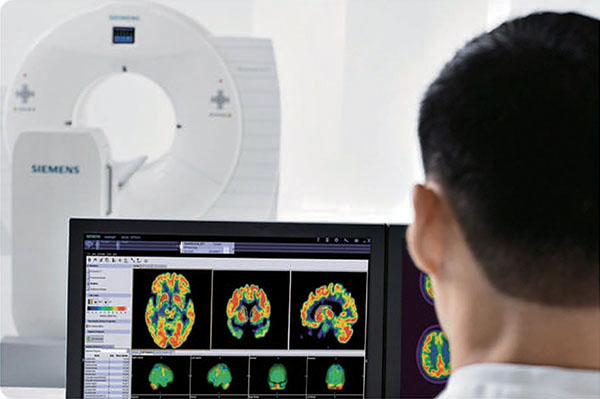
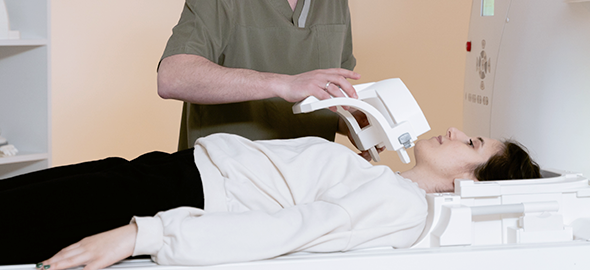
Medical Imaging Examination Platform
Equipped with over 20 imaging devices (4th-gen PET-MR with Compass Tech, 2 PET-CT, 3.0T MRI, 4th-gen dual-source CT). Imaging results enable fusion imaging for precision …

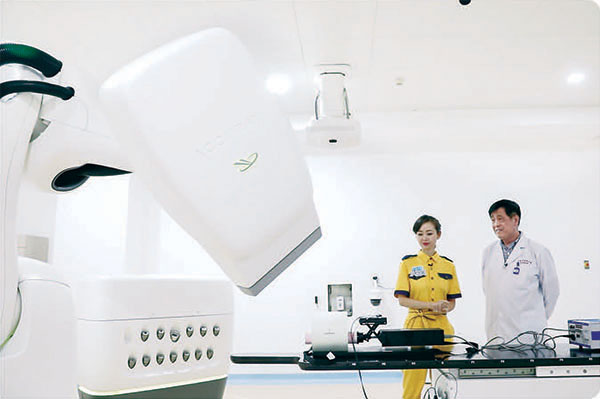
Radiotherapy Oncology Platform
Built per international standards, with Accuray M6 CyberKnife, TomoTherapy H, Varian linear accelerators, ZEISS intraoperative radiotherapy system…
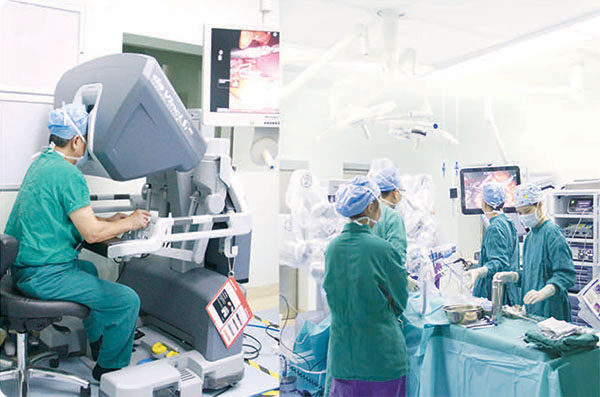
Tumor Comprehensive Treatment Platform
Equipped with da Vinci Surgical System, Siemens/Philips DSA, hybrid ORs, hematological tumor transplantation cabins, NanoKnife, Argon-Helium…
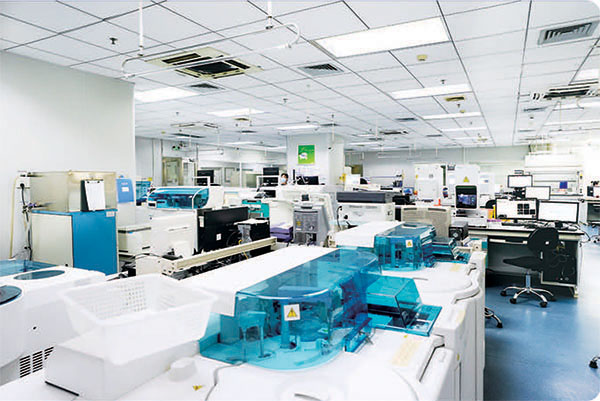
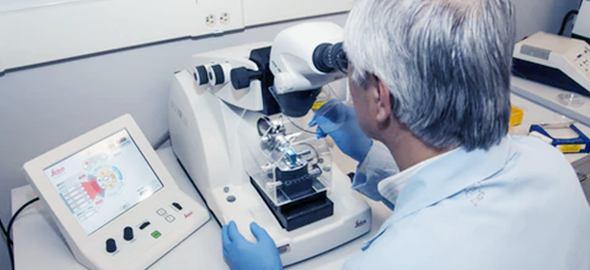
Accurate Inspection Platform
Offers 20+ tumor gene testing packages (WES/NGS). The lab provides 2600+ test items, meeting ISO 15189 and US CAP standards.
…
Jinshazhou HospitaI of Guangzhou University of Chinese Medicine is a tertiary Class-III generaI hospitaI integrating medi cal treat ment, teaching, scientific research, and prevention approved by the Guangzhou Municipal Health Commi ssion .
Jinshazhou Hospital is located at No. 1 Lichuandong Street, Baiyun District. With 1,500 beds, 48 intensive care beds of various types, and 31 modern laminar flow operating rooms, including 5 hundred-level laminar flow operating rooms and 8 interventional operating rooms. In addition , the hospital also plans to build a comprehensive building of 60,000 square meters with 500 VIP wards.
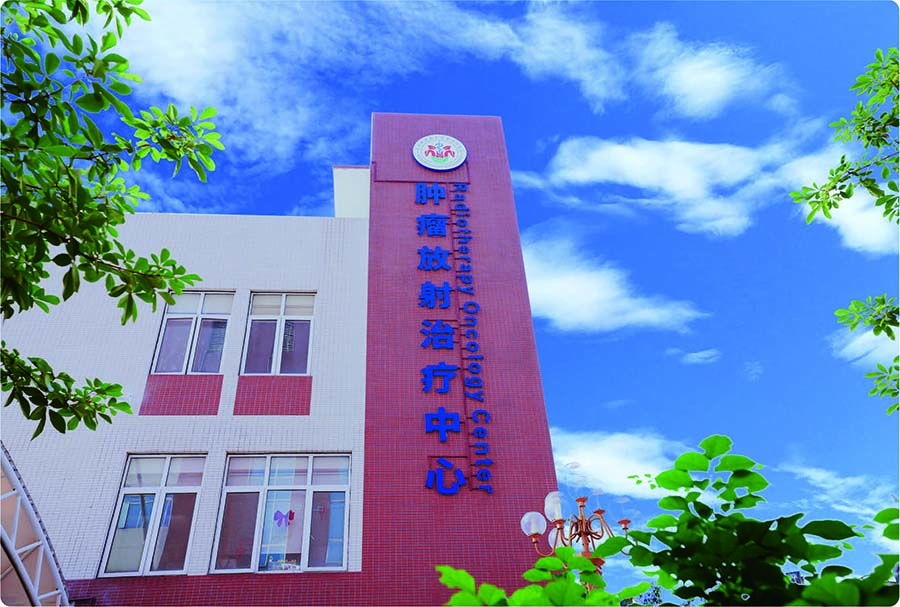
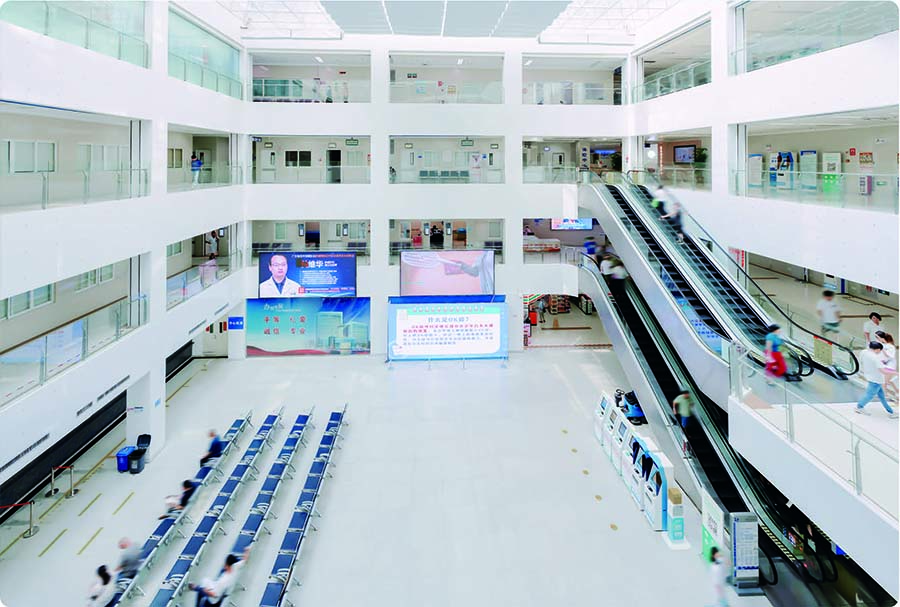
Since the establishment of the hospital, more than 30 oncology experts and teams with rich clinical and academic expe rience from home and abroad have been introduced, and has gradually built Oncology Center, Nuclear Medicine Diagnosis and Treatment Center, Gallstone Center, Blood Purification Center, Orthopedics Diagnosis and Treatment Center, Minimally Invasive Diagnosis and Treatment Center, Intensive Care Unit (ICU), Rehabilitation Ce nter, Ophthalmology Center and other special disciplines .
The hospital has actively assumed social responsibilities and played an important role in the prevention of the epidemic. Regularly carry out public welfare activities such as scientific and technological assistance, popular science education, free clinics, and consultations in the community, which has won unanimous praise from the government and society.
Introduction of Oncology Medical Center
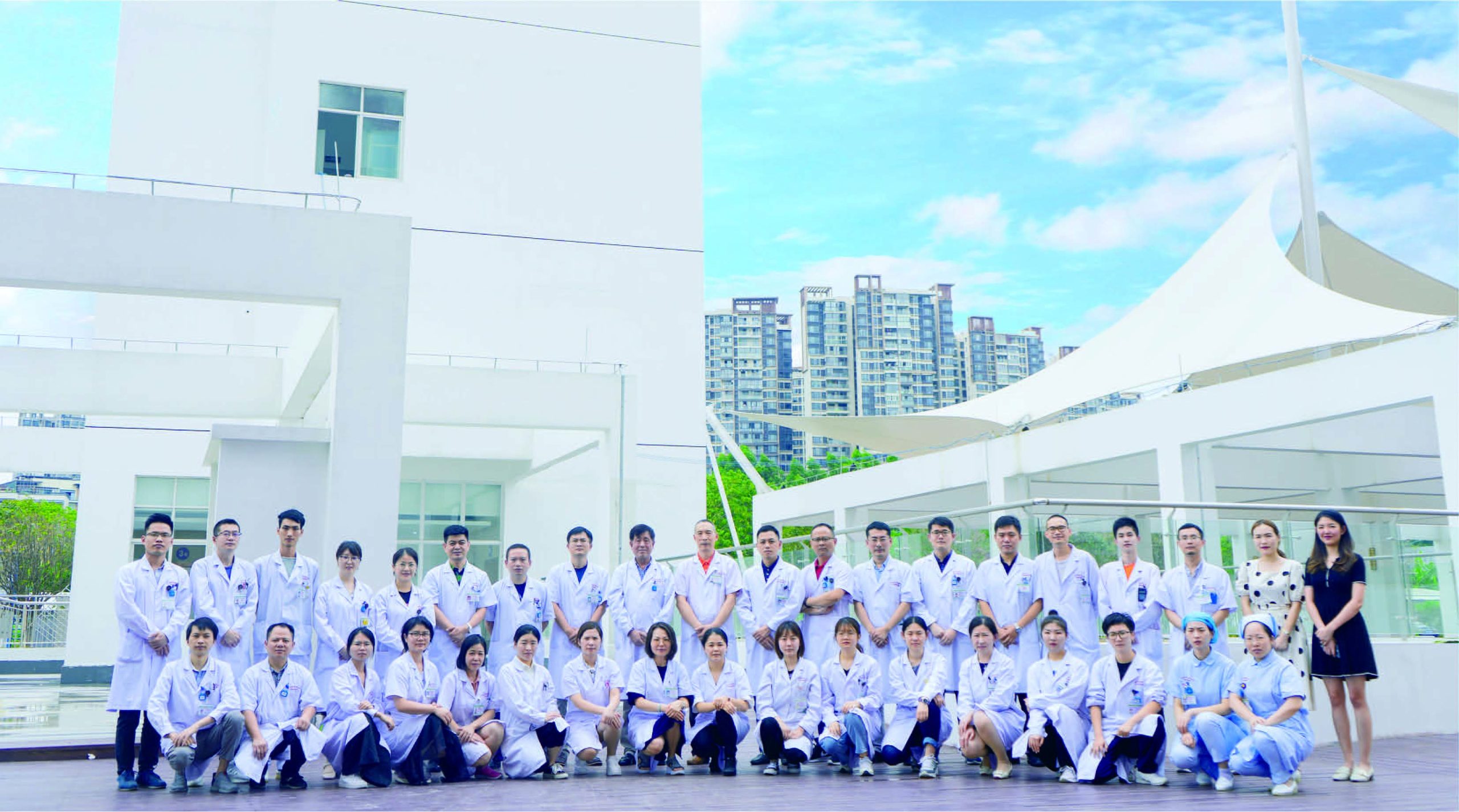
The Oncology Medical Center of Jinshazhou Hospital of Guangzhou University of Chinese Medicine is a modern Sino-Australian cooperative cancer treatment center built to the standards of domestic Grade A tertiary cancer specialist hospitals and top-tier medical institutions.
International Medical Team
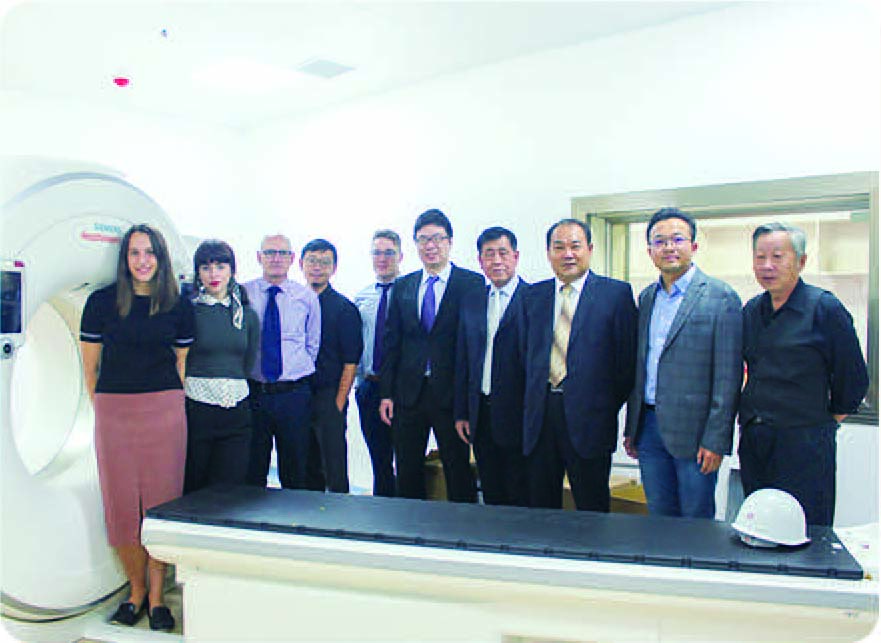
The Center has forged a long-term partnership with the Australian ICON Group, resulting in the establishment of an outstanding international medical team that integrates Chinese and foreign medical experts. The center boasts a total team of 2,113 individuals, comprising.
1511+
Professional Technicians: 1,511
77+
Senior Titles: 77
103+
Associate Senior Titles: 103
422+
Intermediate Titles: 422
Advanced Medical Facilities and Equipment
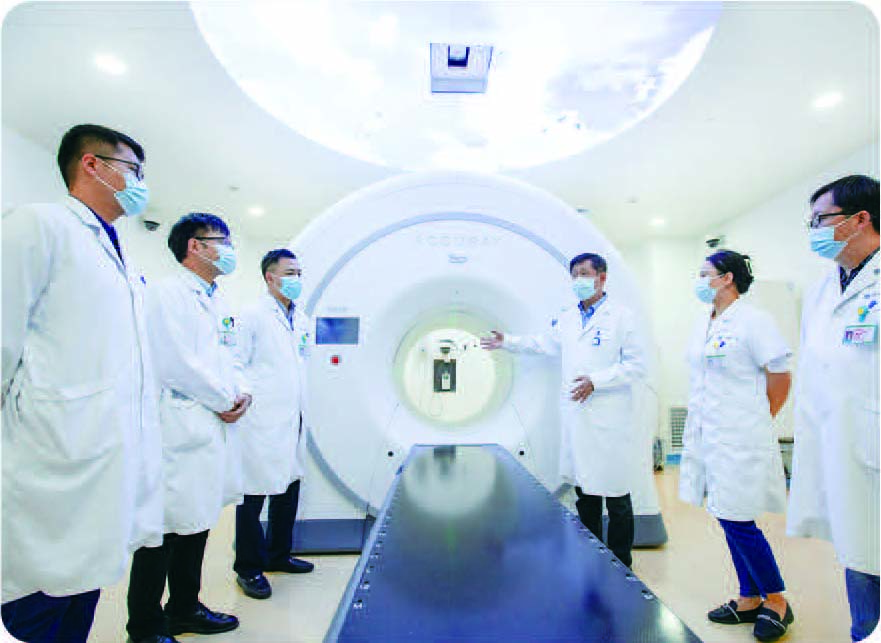
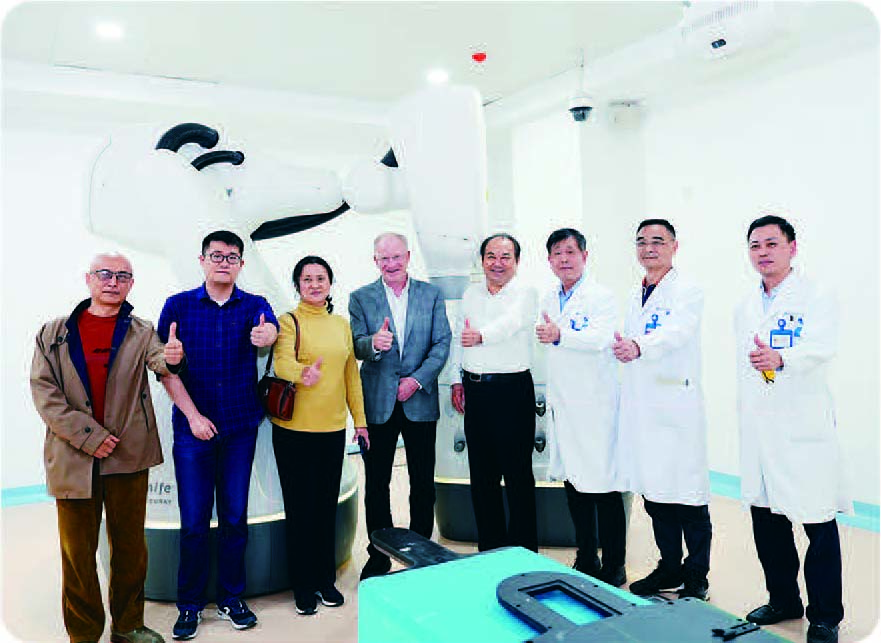
The Center is committed to introducing the most cutting-edge treatment technologies and globally leading cancer medical imaging diagnosis and radiotherapy equipment into the Chinese medical field. It houses a range of state-of-the-art equipment, including but not limited to:
– The first Accuray M6 CyberKnife in China, featuring multi-leaf collimator and dynamic tracking capabilities
– Accuray’s TomoTherapy System (Tomo), a helical tomotherapy system
– Varian’s TrueBeam, a highly advanced radiotherapy system
– Varian’s Halcyon, an intelligent radiotherapy system
– Varian’s Ethos, an adaptive radiotherapy system
– Siemens’dual-energy, four-dimensional, large-bore CT simulator
– Varian’s HDR/LDR intracavitary brachytherapy systems
All of these equipment are supported by the Medical Imaging Department’s MR/PET-CT /PET-MR imaging diagnostic capabilities, ensuring comprehensive and precise diagnostic and treatment services.
Mission
New Technologies Create New Possibilities for Health
Vision
Converge Cutting-Edge Global Medical Technologies to Synchronize with International Advanced Diagnosis and Treatment Standards
Values
High safety,effectively reducing side effects and complications,and reducing local recurrence rate.
Service Philosophy
Enable Patients to Live with Dignity and Physicians to Work with Honor
Department ot Nuclear Medicine
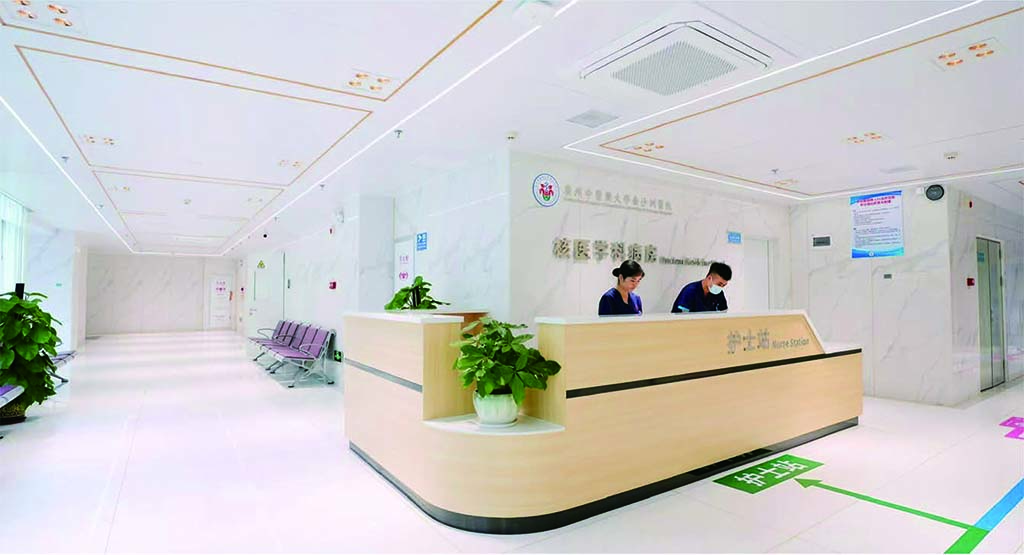
Since its establishment, the Department of Jinshazhou Hospital of Guangzhou University of Chinese Medicine, The department boasts a skiled and dedicated team of physicians, nurses, and technologists who are committed to clinical excellence, education, and research. lt provides comprehensive nuclear medicine imaging diagnostics and radionuclide therapy. Currently, the department has a total of 37 staff members.
Main features and clinical work
Radiopharmaceutical Therapy
lodine-131 Therapy for Differentiated Thyroid Cancer (DTC)
Recognized as one of the earliest examples of targeted therapy, molecular imaging, and theranostics, 1-131 therapy constitutes an essential element in the triple-therapy regimen for DTc (“surgery + 1-131 therapy + TSH suppression””). The clinical portfolio of our department encompasses the application of |-131 $PECT-CT image fusion for diagnosing metastases, as well as molecular targeted therapy for radioiodine-refractory DTC (RAIR-DTC).
lodine-131 Therapy for Hyperthyroidism
This method is characterized by its simplicity, well-established effcacy, low recurrence rate, minimal side effects, and high safety profle. t is particularly suitable for patients with signifcantly enlarged thyroids, as well as those for whom antithyroid drug (ATD) therapy has been ineffective, has resulted in relapse, or has caused adverse effects such as leukopenia liver impairment, or allergic reactions.
Phosphorus-32 (P-32) Patch Therapy
This method is primarily used for the treatment of keloids and infantile hemangiomas. The procedure is characterized by its simplicity,safety,and proven efhcacy.
Strontium-89 Therapy for Metastatic Bone Tumors
This treatment is primarily used to alleviate cancerous pain caused by bone metastases from malignant tumors (such as prostate cancer, breast cancer, lung cancer, etc.. its main advantage is the long duration of pain relief.
Yttrium-90 (Y-90) Resin Microsphere Selective Internal Radiation Therapy (SIRT)
This treatment is primarily indicated for unresectable maliqnant liver tumors, such as colorectal cancer liver metastases and primary hepatocellular carcinoma. The therapeutic process begins with a pre-treatment planning phase involving nuclear medicine SPECT-CT imaging (often referred to as Tc-99m MAA mapping) to assess the patient’s suitability for treatment and calculate the therapeutic dosage. Subseguently, the Y-90 resin microspheres are delivered directly to the target tumors via the hepatic artery during an interventional radiology procedure. The tumors are then destroyed by the beta radiation emitted by the Y-90.
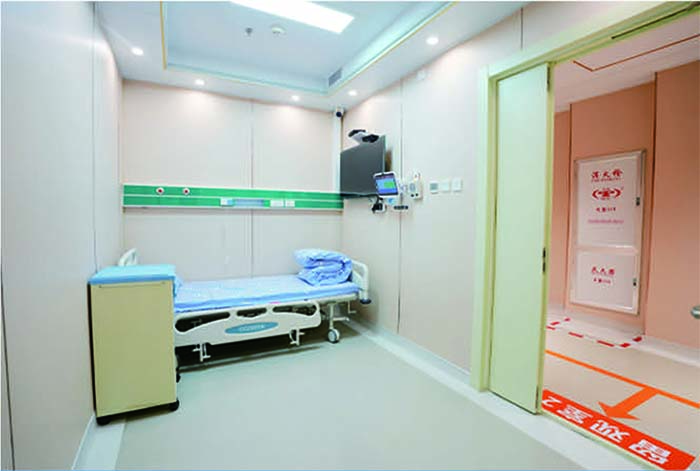
Yttrium-90 Observation Ward (4 rooms)
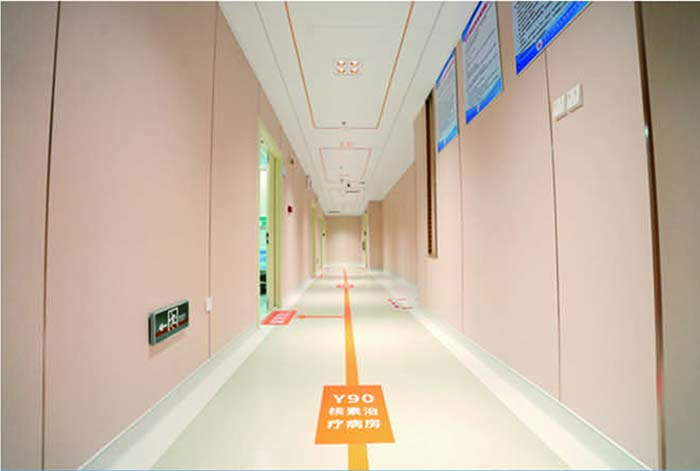
Ward Public Area