
 +86 18928918121
Distributed Nuclear Magnetic Adaptive Technology
Prior to treatment, an MRI simulation scan is performed to re-con和m the tumor’s position and morphological changes. The radiation oncologist then modifies the target volume accordingly. A rapid planning process is used to re-optimize the treatment plan. Finally, the patient is transferred to the linear accelerator via a shuttle couch, which ensures their position remains unchanged throughout the process.
Key Features of Distributed Nuclear Magnetic Adaptive Technology
More Precise Image Guidance: Compared to current CBCT -guided adaptive radiotherapy, MRI provides images free from air-bone artifacts, offers superior soft-tissue resolution, and delivers no additional radiation dose.
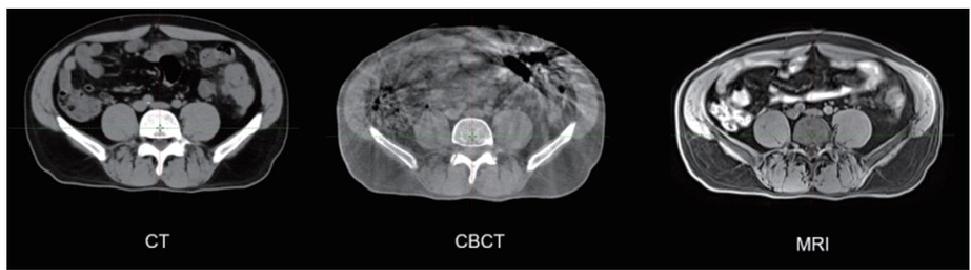
Faster Treatment Delivery: Compared to existing integrated MR曰inear accelerators (MR-linacs), which require approximately one hour for a single online adaptive session, the distributed NMR adaptive radiotherapy system significantly reduces the treatment time. The entire process, including a 6-minute MRI scan and a 6-minute plan optimization, is streamlined to be completed within 30 minutes.
Enhanced Operational Efficiency: Unlike existing adaptive radiotherapy systems that must pause treatment after imaging to wait for target modification and plan re-optimization, the distributed adaptive approach efficiently coordinates the MRI simulator with the treatment accelerator, eliminating machine idle time.
Our Hospital’s First Clinical Application of Distributed Nuclear Magnetic Adaptive Technology – September 22, 2025